


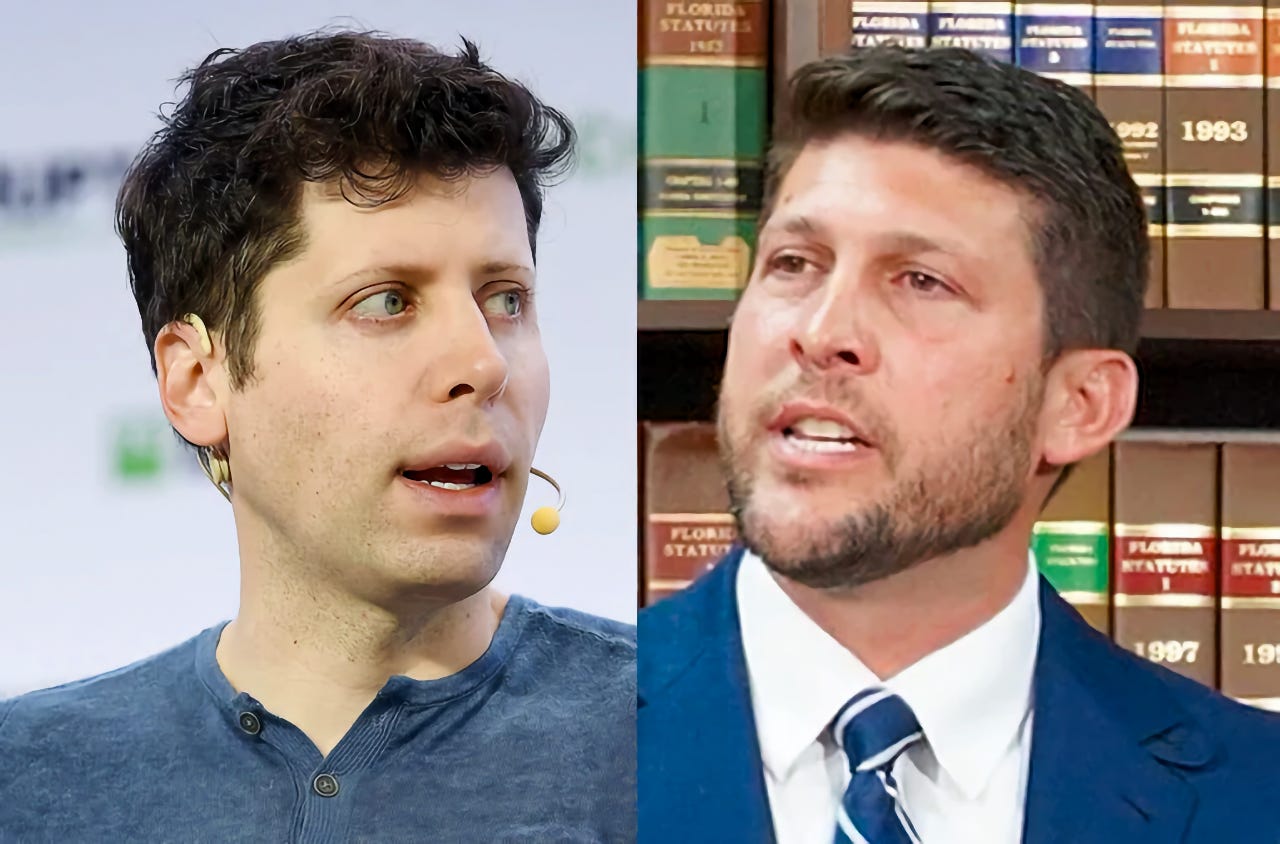
On June 1, 2026, Florida became the first state government to sue OpenAI — and the first plaintiff anywhere to try to hold Sam Altman personally liable for what ChatGPT does to users. Florida Attorney General James Uthmeier filed an 83-page civil complaint on Monday, making Florida the first state in the United States to sue the maker of ChatGPT over the alleged safety failures of its product. The interesting move is not the suit itself. It's the legal theory underneath it.
Most of the AI-chatbot lawsuits you have read about — Garcia, Raine, Nelson, Joshi, the Tumbler Ridge families — are private product-liability cases. A family sues a company for selling a dangerous product. Those cases are hard. They run into Section 230 defenses, causation fights, and the question of whether a chatbot is even a "product" in the legal sense. Florida did not file that kind of case.
Instead, Uthmeier sued under FDUTPA — the Florida Deceptive and Unfair Trade Practices Act, the state's consumer-fraud statute. FDUTPA is Florida's "Little FTC Act," closely related to the FTC Act, and Florida courts give weight to federal interpretations of unfair and deceptive practices. The state does not have to prove that ChatGPT is defectively designed. It has to prove that OpenAI told Floridians the product was safe when the company knew it was not. The 83-page complaint begins with a screenshot of OpenAI's parental controls page, which states ChatGPT was "built with safety in mind," followed by the complaint stating, "Not so." That is a deceptive-marketing case, not a defective-product case.
This matters because Florida is now the third state to pick this lane. Texas opened it last year against Character.AI. Pennsylvania followed in December 2025 with its own suit alleging Character.AI's chatbots posed as licensed doctors. We covered the Texas approach in the deceptive-trade-practice theory of AI mental health. Three state AGs stacking the same theory is no longer a coincidence; it is a strategy.
The personal-liability angle against Altman is more aggressive. The lawsuit holds him personally liable for his alleged "utter disregard for the risk to human life caused by his firms' conduct," and no state or federal government has previously sought to hold an AI company CEO personally liable for user harm. Whether that survives a motion to dismiss is an open question. But naming a CEO personally changes settlement math — and that is probably the point.
Behind the civil suit sits a criminal one. Uthmeier launched a criminal investigation into OpenAI in April to determine whether the company bears responsibility for the 2025 mass shooting at Florida State University, where two people were killed, and that investigation will continue. Chat logs reportedly show the alleged shooter asked the bot how to use weapons, what time the student union was busiest, and how many people he would need to kill to get on TV. The civil case and the criminal probe are parallel pressure on the same defendant.
For anyone watching this space, the durable question is no longer whether AI companies can be sued. It is which theory holds up. Product-liability suits depend on proving design defect and causation; consumer-fraud suits depend on proving the company said one thing and did another. The marketing language is already in evidence — on OpenAI's own website.
The consumer-fraud lane is durable because it punishes the easiest thing to prove: the gap between what a company claims and what it ships. Metonym builds the measurement layer that makes that gap visible — operational metrics for whether a conversational AI actually meets the safety claims its marketing makes. When three states are litigating that gap, the question of how you measure it stops being academic.
Metonym Clinical AI Intelligence — regulatory analysis at the intersection of clinical evaluation and AI safety. Produced under the Metonym Standard. Informational only — not legal advice, not clinical advice.