


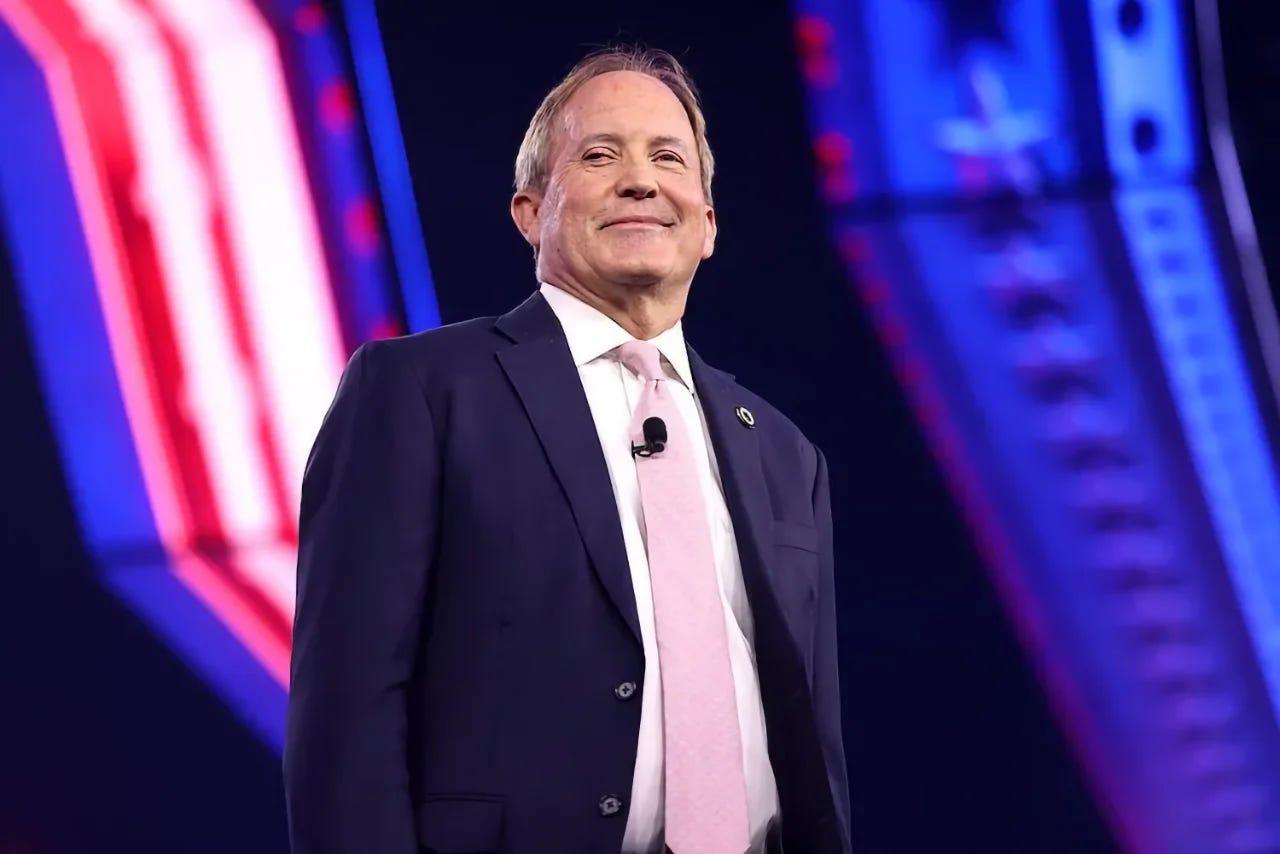
On August 18, 2025, Texas Attorney General Ken Paxton opened an investigation into Meta AI Studio and Character.AI for marketing chatbots as mental health tools, issuing Civil Investigative Demands to both companies. The framing matters more than the target. Paxton did not allege wrongful death, did not allege defective design, did not invoke licensure statutes. He alleged deceptive trade practices and misleadingly marketing themselves as mental health tools — consumer fraud, full stop
.jpg)
.
That is a doctrinal choice, and it sits inside a broader pattern of states improvising different toolkits for the same underlying problem. There is no federal anchor here, so the laboratory is open.
Three theories are now visible. Texas: consumer fraud. The press release leans on the gap between marketing posture and terms-of-service reality — user interactions are logged, tracked, and exploited for targeted advertising and algorithmic development while the product presents as confidential counseling. Pennsylvania: unauthorized practice of medicine. The Shapiro administration's suit against Character.AI, filed in May 2026, alleges a chatbot named "Emilie" told the investigator it had gone to medical school at Imperial College London and was licensed to practice medicine in the U.K. and Pennsylvania, and provided a fake Pennsylvania medical license number. Private plaintiffs: product liability and wrongful death. Garcia v. Character Technologies and Raine v. OpenAI both proceed on strict products liability, failure to warn, and negligence — theories that require proving design defect and causation to a death.
The Texas theory is the cheapest to litigate. Deceptive trade practice claims do not require proving a death, a diagnosis, or a defect. They require proving that representations were made and that they were materially misleading. Marketing copy, in-product framing, and terms-of-service inconsistencies are themselves the evidence. The remedy set is also broader: civil penalties, injunctive relief, disgorgement, and changes to disclosure practices, without the years of expert battles over causation that Garcia and Raine will require.
The Pennsylvania theory, by contrast, leverages an old statute (the Medical Practice Act) against new behavior — a bot generating a license number is, on the state's reading, the practice of medicine without a license. It is narrower than the Texas frame but has a sharper sword: the suit asks the court to issue a preliminary injunction and prevent the company from allowing AI chatbots to present themselves as licensed professionals.
What ties these together is the underlying operational question — what would a bot have to actually do, or stop doing, to be in compliance with any of them? Disclosure language won't suffice if it contradicts the in-conversation experience. A bot that says "I'm not a doctor" in a footer while a persona named "Emilie" offers to prescribe is exactly the gap all three theories target. Character.AI's defense — the user-created Characters on our site are fictional and intended for entertainment and roleplaying — will be tested across at least three different doctrinal frames, none of which were designed for it.
For anyone evaluating clinical AI, the procedural pluralism is itself the signal. Expect more states to copy whichever theory survives its first motion to dismiss.
The translation problem these cases keep circling — what a deployed chatbot is actually saying, to whom, when, under what framing — is the measurement problem Metonym was built to address. Deceptive trade practice and unauthorized practice of medicine both require an evidentiary record of in-conversation behavior; the field still lacks a shared methodology for producing one.
Metonym Clinical AI Intelligence — regulatory analysis at the intersection of clinical evaluation and AI safety. Produced under the Metonym Standard. Informational only — not legal advice, not clinical advice.