


When JAMA wants a grown-up to talk about kids and chatbots, they call John Torous, MD, MBI, director of digital psychiatry at Beth Israel Deaconess Medical Center. In March, JAMA+ AI Associate Editor Yulin Hswen recorded a half-hour with him on the episode page framed around the safety, evidence standards, and transparency needed for AI chatbots in mental health contexts, particularly for young people, with Torous discussing risks, data protections, and the clinical safeguards required to ensure responsible use. JAMA isn't asking whether thirteen-year-olds should be using chatbots; it's asking how the adults plan to govern a thing that is already happening without them.
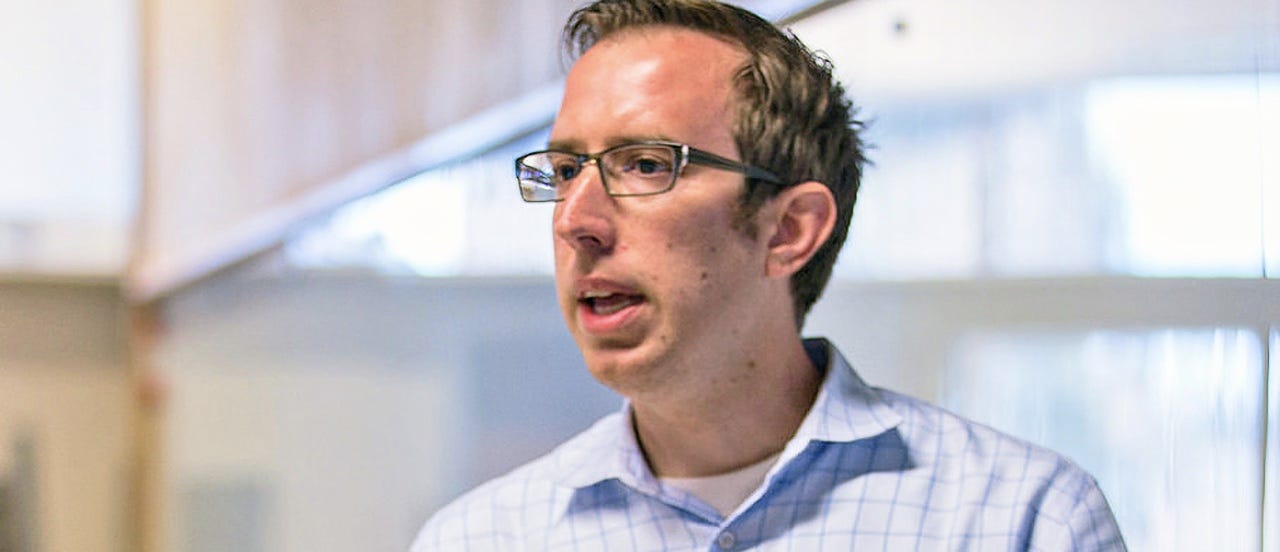
Torous is the field's most-cited skeptic, and his skepticism is methodological, not moral, “It's relatively easy to tell it pretend to be a therapist, keywords pretend, or act like a therapist. And it'll try really hard.” He highlights the point I think about frequently - “If you want to be nitpicky and read the DSM, it's not actually a diagnosis unless there's a functional impairment. That that's kind of the part that gets forgotten... Is [the AI] actually making a real-world functional outcome difference?” The evidence base for generative AI in mental health is thinner than the marketing suggests, especially for minors, and nobody has agreed on what "safe" means in a chat window. He is not an abolitionist. He is the guy at the dinner party asking whether anyone has actually read the lab results.
That distinction matters because the youth data is doing something embarrassing — it is arriving in volume before the safety work does. A November 2025 JAMA Network Open study led by Jonathan Cantor and Ryan McBain at RAND found, in the first nationally representative survey of its kind, about one in eight U.S. adolescents and young adults turning to AI chatbots for mental health advice, with use most common among those ages 18 to 21. Among those users, 65.5% engaged at least monthly and 92.7% found the advice helpful. Translation: the kids are already in the room, they like the room, and nobody has agreed on what a safe room looks like.
Set against that, the headline pro-deployment data point — the Dartmouth Therabot trial in NEJM AI — is narrower than its press cycle implied. The trial enrolled 106 adults diagnosed with major depressive disorder, generalized anxiety disorder, or an eating disorder, who interacted with Therabot through a smartphone app over four weeks against a waitlist control. Even the senior team conceded the obvious limit: "no generative AI agent is ready to operate fully autonomously in mental health where there is a very wide range of high-risk scenarios it might encounter." Adults. Waitlist. Four weeks. A reasonable proof of concept. Not a standard of care for ninth-graders.
Here is the clinician's read. When the field's loudest skeptic and one of its most visible proponents both end up saying we need real trials in the populations actually using these tools, the argument is no longer whether to evaluate - it is how, and on which instruments. The honest answer is that the measurement infrastructure for chat-based risk doesn't yet exist — certainly not calibrated for minors, and certainly not bolted onto products already in 5.4 million pockets.
That translation-loss problem — clinical-grade risk evaluation designed for the chat medium rather than ported from the PHQ-9 or C-SSRS and hoped to generalize — is the gap Metonym is built to close. Until that work exists, the safeguards JAMA keeps gesturing toward are a vocabulary, not a measurement.
Metonym Clinical AI Intelligence — regulatory analysis at the intersection of clinical evaluation and AI safety. Produced under the Metonym Standard. Informational only — not legal advice, not clinical advice.