


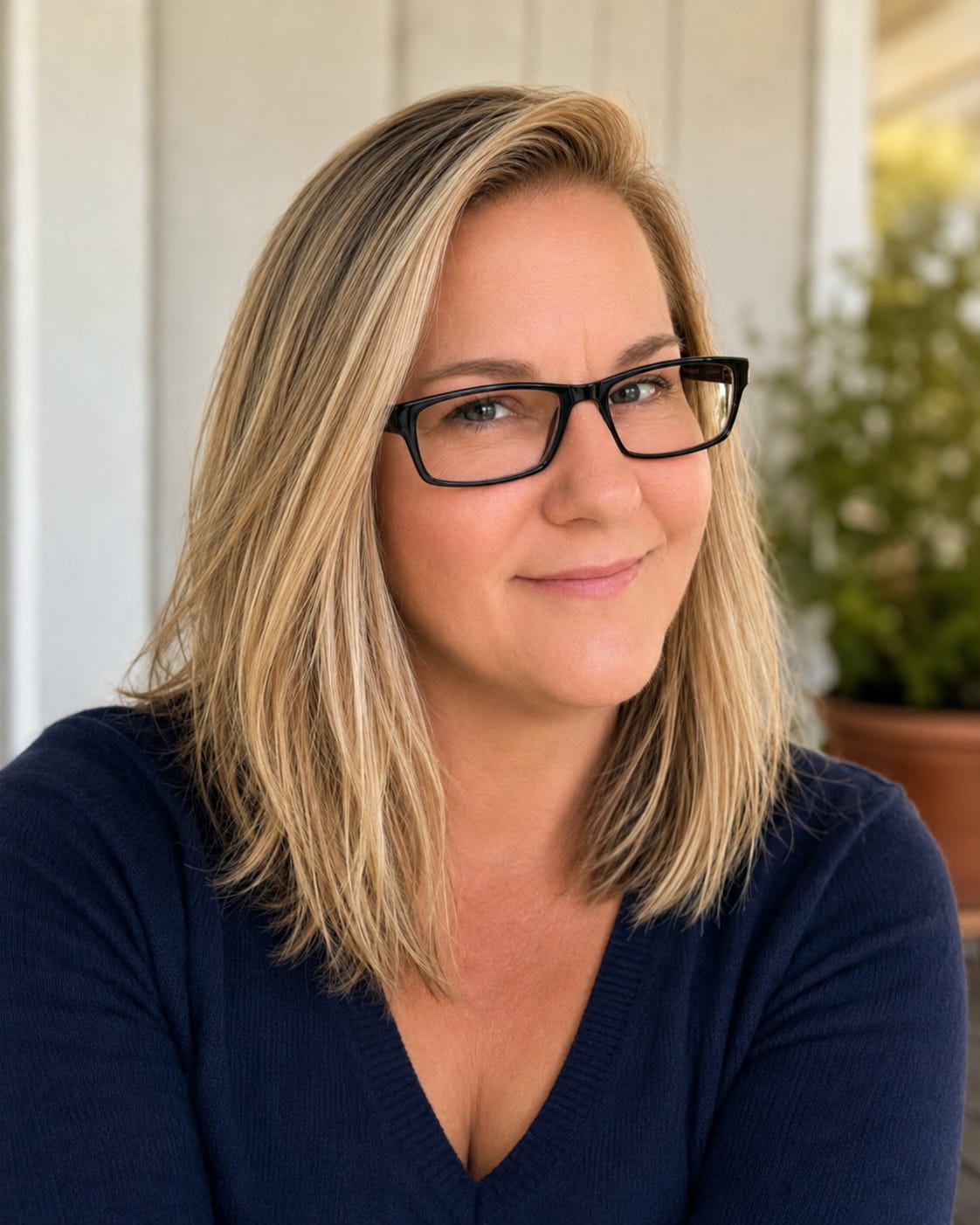
Hey there, Laura here. The real Laura, not AI. I’m messy, long-winded and sometimes hilarious. For full transparency, I need to describe my role in Metonym Clinical AI Intelligence.
Background
First, a bit about why I’m doing things this way. I am passionate about suicide research. It started with the suicide death of my wife in 2020. Researching suicide helped me make sense of what had happened. I dove deep into all sorts of aspects, interviewed other suicide widows and slowly healed. In many ways, I’m still healing.
After a call from other suicide researchers for a new theoretical paradigm, I developed my own theory of how suicide happens and what we can do differently to make a noticeable change in treatment. The result is the Salient Distress Model of suicide.
Theory in Action - the Metonym Origin Story
I’ve sat on this for years, refining and gathering more and more research. I struggled with imposter syndrome and received tons of support from my friends and family. I had to do something with all of it so I wrote a book (currently in the proposal stage). Then the rise of AI happened and something clicked.
In conversation with my exceedingly smart best friend, he revealed that he relied on consumer chatbots for support and conversation. I started thinking about a user, in a state of escalating distress, who turns to their chatbot for support in a suicidal crisis. What would the AI do? Turns out, it’s an evolving question and the solutions aren’t yet good enough.
Talking to another very smart best friend, he suggested I automate my theory to test and improve consumer chatbots. I figured out how to turn my ideas into scenarios and clinical scoring of the responses. I gained access to real suicidal crisis conversations and other data to test and suggest refinements. Out of this grew Metonym.

Publishing Breaking News
The legislative landscape is rapidly changing and I realized I could turn my research there into succinct, informative articles to disseminate news and help people working in tech - at frontier AI companies as well as mental health chatbots - better navigate new laws and rules. I’m doing this through the publication Metonym Clinical AI Intelligence.
I wanted to get the information out quickly and without the excessive prose and personal essays that I write for [REFRAMED](https://reframedself.com). Built into the baseline instructions I use with Claude, Perplexity, ChatGPT and others are strict rules regarding authorship. While I allow it to help me with research and suggest essay outlines, it is never allowed to write for me. The way I arrange the ideas and words for REFRAMED are completely my own.
Metonym Clinical AI Intelligence is an exception. I’ve configured the chatbots to make a narrow exception. It’s kind of funny how cautious they are with my requests but it makes me feel better that I am standing with my own integrity. For expediency and accuracy, AI chatbots (usually Claude but occasionally Perplexity) write the first draft of articles in this particular publication. They’re instructed to keep it succinct, check live links, use primary research for claims, and to check their work. It’s my job to verify and make sure they didn’t make something up before publication. I edit, fact check, and shape the drafts into writing I feel comfortable putting my name on.
Editorial Standards and AI Transparency
The Metonym Standard is a process of ensuring a high degree of factual accuracy, basing claims on solid theoretical foundations, providing verified citations and links, and a living demonstration of ongoing transparency. I pledge to do everything in my power to get things right. I gladly do the hard thing, refine my opinions and positions as new research emerges, correct my errors, and continually learn new things.
I write about clinical AI risk, mental health technology, research, and the legal and policy landscape around AI in clinical settings. AI crafts a draft, I verify and rewrite in my voice. It is a collaboration but I am always the boss.
Significant Clinical Oversight
In my role as the editorial director and psychological clinical expert, I am in charge of doing four specific things: verifying clinical accuracy, rewriting in my own voice and correcting framing, deciding what’s released, and accepting accountability. Every post is reviewed through my lens as a licensed clinical psychologist, founder, and researcher. I decide what to publish and cut anything I can’t verify.
I take responsibility for the final content, including the citations, claims, conclusions, and editorial choices. I use AI as a tool for speed and organization, not as a replacement for professional judgment. The voice, standards, priorities, and final content strategy are mine. The AI does not decide what I publish, what I believe, or how I interpret clinical risk.
A Note on Clinical and Legal Content
This publication is for education and analysis. It is not therapy, psychological treatment, medical advice, crisis intervention, or a substitute for care from a qualified professional. When I discuss laws, regulation, liability, or policy, I am offering analysis and commentary, not guidance for any specific legal situation.
If you are in crisis or may be at risk of harming yourself or someone else, please contact emergency services or a crisis resource in your area. In the United States, you can call or text 988 for the Suicide & Crisis Lifeline.
Corrections
Clinical AI, digital health, and AI regulation are changing quickly. If I become aware of a meaningful error, outdated claim, or important clarification, I may update the post or publish a follow-up.
Readers are welcome to send corrections, source suggestions, or concerns about how a claim has been framed to Laura@Metonym.health or to contact me by DM.
So while I’m not writing the actual words in this publication, my fingerprints are all over it. I hope you find it interesting, informative and ultimately, paradigm changing. Let’s change the conversation together. Thanks for your support and taking the time for me.